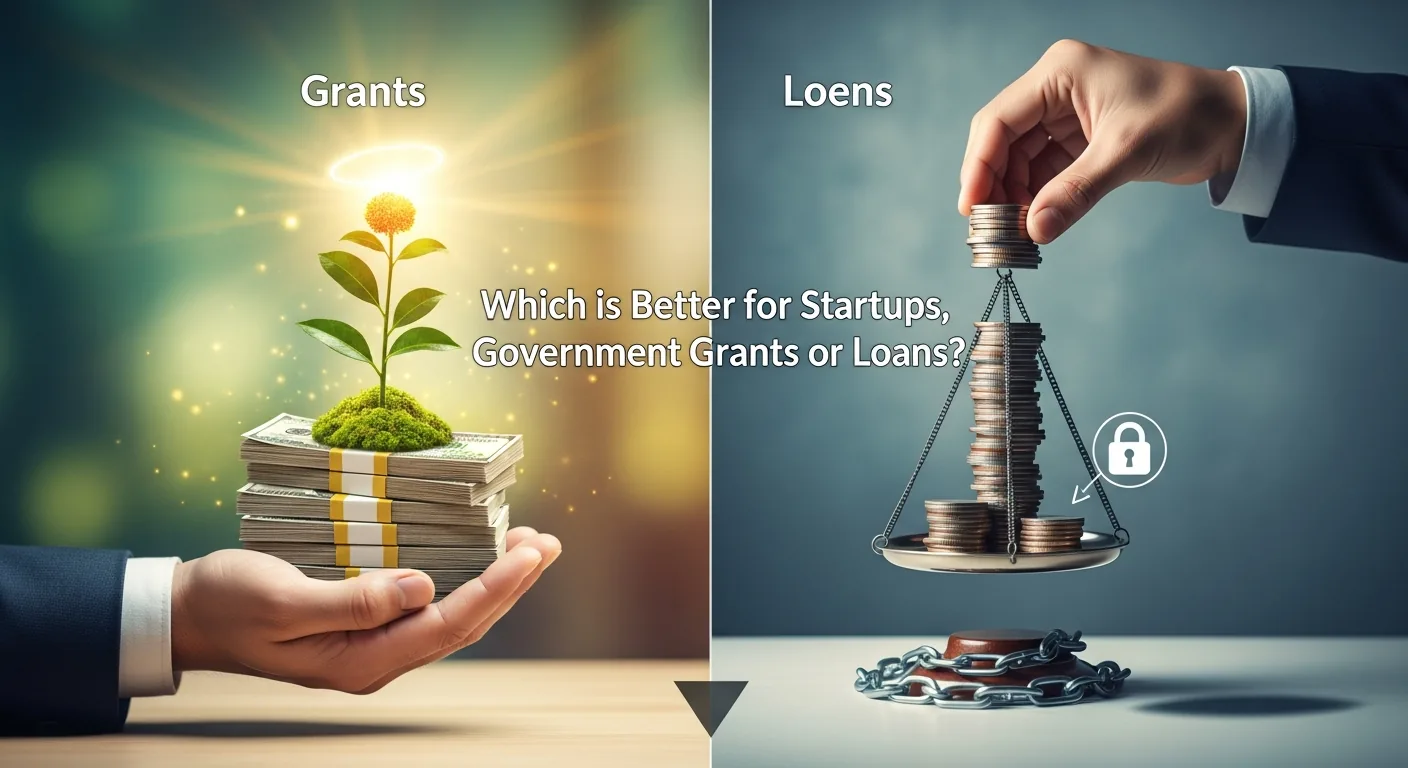
Which is Better for Startups, Government Grants or Loans?
Compare government grants vs loans for startups, learn eligibility, pros and cons, and discover which funding option best fits your business growth plans.
Written by
Ahmed Khan
When it comes to financing a startup, there are a lot of options available.
One common question is whether it's better to go with a government grant or loan. The answer depends on a number of factors, so let's take a closer look at both options to see which one makes the most sense for your business.
Government Grants
Grants are often seen as the more desirable option because they don't have to be repaid. That said, they can be harder to qualify for and there's usually more paperwork involved.
Grants are usually need-based, so you'll need to demonstrate that your business will create jobs or provide some other economic benefit.
You'll also need to prove that you can't get the funding you need from other sources. For these reasons, grants tend to be more suited for established businesses that are looking to expand.
The different types of grants include:
- One-time and renewable grants
- Non-repayable government grants
- Partial contribution grants
One-time and renewable grants are the most common types of government grants.
One-time grants are given for specific projects, such as research and development or equipment purchases. Renewable grants are given for ongoing activities, such as hiring staff or marketing campaigns.
Non-repayable government grants don't have to be repaid, but they usually come with strict eligibility criteria.
To qualify, you'll need to demonstrate that your business will create jobs or provide some other economic benefit. You'll also need to prove that you can't get the funding you need from other sources.
Partial contribution grants are a type of government grant that doesn't have to be repaid. However, unlike other types of grants, you'll only receive a portion of the funding you need from the government.
The rest of the funding will need to come from other sources, such as private investors or loans.
To qualify for a partial contribution grant, you'll need to demonstrate that your business will create jobs or provide some other economic benefit. You'll also need to prove that you can't get the full amount of funding you need from other sources.
Government grants in general are the best options; however, they are much more competitive and can take longer to find and be approved for.
 Experts available today
Talk to a real funding expert — not a bot
A real person reviews your business on the call and tells you which grants you qualify for and how much you could get.
- Your eligible grants, answered directly
- How much funding you can apply for
- Programmes open right now
Government Loans
Loans have to be repaid, but they tend to be easier to qualify for than grants. With a loan, you'll typically just need to fill out an application and provide some financial information. The main downside of loans is that they need to be repaid with interest, which can add up over time. However, if you're confident in your ability to repay the loan, it can be a good option for business financing.
The different government loan types include:
- No interest or low interest government loans
- Guaranteed government loans
- Conditionally repayable government loans
No interest or low interest government loans don't have to be repaid until a certain date. The due date is typically when the business is expected to start making a profit.
Guaranteed government loans are backed by the government, which means the lender is less likely to lose money if you default on the loan.
Conditionally repayable government loans are similar to guaranteed government loans, but they typically have stricter repayment terms.
To qualify for a government loan, you'll usually need to provide financial information, such as your business' balance sheet and income statement. You may also need to provide collateral, such as property or equipment, to secure the loan.
Government loans usually have better terms than private loans and are often much easier to be approved for than a government grant, as they are far more available.
There's no easy answer when it comes to choosing between government grants or loans for your startup. It's important to weigh the pros and cons of each option carefully to see which one makes the most sense for your business.
Ultimately, the best choice will depend on factors like your business sector, growth plans, and financial situation.
It is always a good idea to see the Funding Database which has all of the government grants, government loans, tax breaks, and credits from across all Canadian government agencies. Currently, over 1,500 funding programs are available for small business owners to use.
Talk to a financial advisor if you're still undecided; they can help you figure out which option is right for you.
About Ahmed Khan