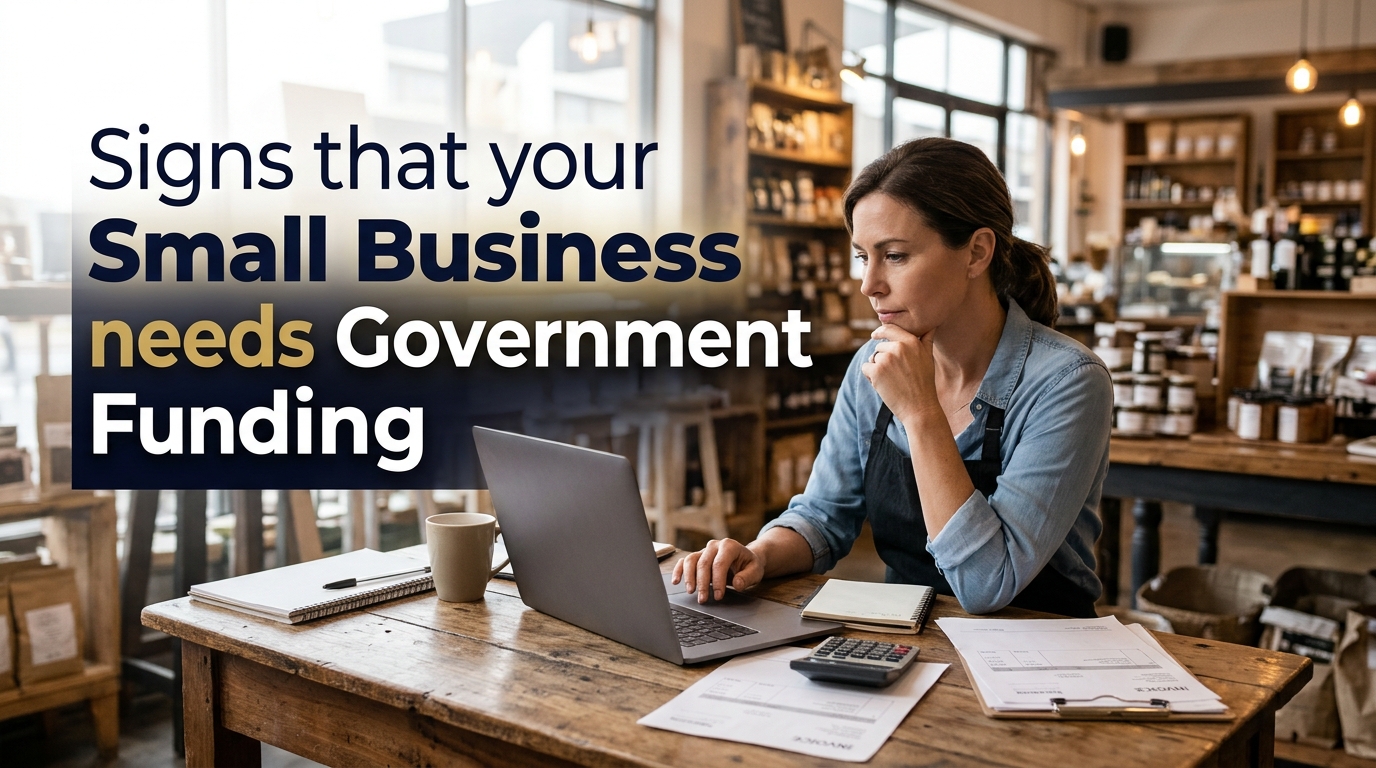
Signs that your Small Business needs Government Funding
Learn the signs your small business may need government funding, from expansion and start-up costs to financial difficulties, and explore practical ways to stabilise your finances.

Written by
Sofia Rossi
Signs that your Small Business needs Government Funding
Small businesses form the backbone of the UK economy, contributing significantly to job creation and overall economic growth. However, the cost of doing business can be significant, and sometimes, small businesses may need some assistance to achieve their goals.
One of the ways that small businesses can get help is through government funding. Government funding provides financial support to businesses that meet specific criteria, enabling them to establish and grow their operations.
But how do you know if your small business needs government funding? Here are some signs to look out for:
- You are unable to secure funding from traditional sources:
If you have tried to secure funding from banks and other traditional financial institutions but have been unsuccessful, government funding may be an option worth exploring.
- You are looking to expand your business:
If you are looking to expand but do not have sufficient funds to do so, government funding can provide you with the financial resources needed to take your business to the next level.
- You are a start-up:
If you are a new business with limited funds, government funding can provide you with the necessary capital to get your business up and running.
- You are a business in a disadvantaged area:
Businesses located in disadvantaged areas may have more difficulty securing funding. However, government funding programmes can provide support to these businesses to help them establish and grow their operations.
- You are involved in a specific industry:
Some government funding programmes target businesses in specific industries, such as renewable energy or healthcare. If your business operates in one of these industries, there could be funding programmes available to support your operations.
In conclusion, while government funding may not be the solution for every small business, it can be an essential lifeline for those that need it. So if you feel that your business meets any of the above criteria, it may be worth exploring government funding options to help grow your business.
Below are the points we will be looking at as we discuss Signs that your Small Business needs Government Funding
- Your business is facing financial difficulties:
If your business is struggling financially, government funding can be a vital source of support in helping to stabilise your operations and get your business back on track.
Financial Troubles and Solutions for Your Business in the UK
As a business owner, it's a challenging time when you start facing financial difficulties. In the UK, the government provides various funding options to help businesses in such situations. Many businesses find themselves at risk of closure or insolvency when they struggle to pay their debts, outgoings, and employees. If your business is struggling with finances, you may feel like your hands are tied, but don't despair - there are ways to address the issue.
 Experts available today
Talk to a real funding expert — not a bot
A real person reviews your business on the call and tells you which grants you qualify for and how much you could get.
- Your eligible grants, answered directly
- How much funding you can apply for
- Programmes open right now
1. Know Your Funding Options
In the UK, the government provides a wide range of financial support for businesses. One option is applying for government-backed loans to help with cash flow management. Various grants and tax reliefs are also available if you are eligible. Some businesses in specific sectors may be entitled to emergency funding, such as retail, hospitality, and leisure industries.
2. Cut Back on Expenses
If your business is struggling financially, it's essential to take a close look at your expenses and identify any non-essential spending that you could cut back on. Consider looking for more cost-effective ways to run your business, such as switching to a cloud-based accounting system or using remote workers instead of office-based employees.
3. Refinance or Restructure Your Debt
Another option to consider is to refinance or restructure your debt. This means renegotiating the terms of your loans with your lenders to make your repayments more manageable. You can also explore debt management options like debt consolidation, which combines your existing debts into one loan, allowing you to make a single monthly payment.
4. Seek Professional Advice
If your business is facing financial difficulties, it's vital to seek professional advice from a qualified accountant or adviser. They can help you identify the most effective ways to stabilise your finances, including refinancing or restructuring your debt, negotiating with creditors, and identifying ways to reduce expenses.
5. Plan for the Future
Looking to the future is an essential part of getting your business back on track. Use this as an opportunity to review your business plan, assess your cash flow, and identify opportunities for growth. Make changes where necessary to ensure that your business is sustainable in the long run.
6. Stay Positive
While facing financial difficulties can be incredibly challenging, it's essential to stay positive and seek help when needed. The most important thing is to take action and remain focussed on finding solutions to the problems facing your business. Remember that by taking positive steps to stabilise your finances now, you will be setting your business up for long-term success.
In conclusion, financial troubles can be overwhelming for any business owner, but there are several options available to help stabilise your finances. Understanding your funding options, cutting back on expenses, refinancing or restructuring your debt, seeking professional advice, planning for the future, and maintaining a positive attitude are all key to overcoming financial difficulties successfully. By taking proactive steps and seeking help when needed, you can ensure that your business remains sustainable and set up for long-term success.
Helpful resources to get you going in the right direction with your own business:
Use the Business Plan Builder Tool to develop your own business plan. And use the Funding Database to find all government funding options for your small business.
About Sofia Rossi
Sofia is a business consultant at UK Startups who specializes in helping small business owners optimize operations and capitalize on market opportunities.