How Long To Keep Business Records In Canada
Learn CRA business record retention rules in Canada, including what documents to keep, how long to store them, and best practices to avoid audits and penalties.
Written by
Chloe Nguyen
Business Records and Document Retention
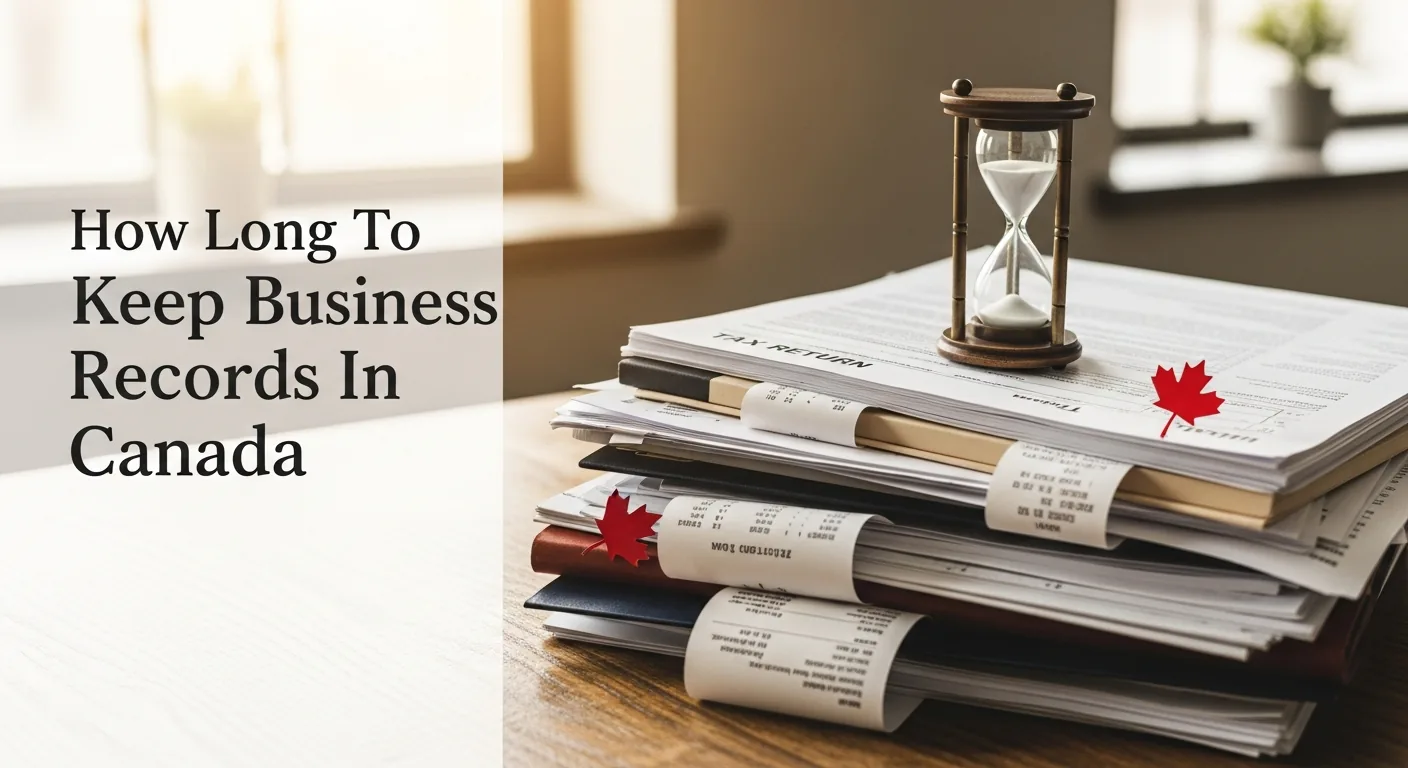
It is important to keep business records such as pay stubs, tax records, and other supporting documents. The Canada Revenue Agency (CRA) standards state that business owners should keep most documents for a six to seven-year period. Complying with these standards can seem a little daunting, especially with rising document storage costs.
In Canada, the amount of time to keep business documents for tax records is different than in the U.S., so make sure you are following the right guidelines as opposed to the IRS guidelines. The six-year period will begin late if you file your tax return late. Keeping all supporting business documents for seven years to avoid any potential problems is often the best practice.
What Are Business Documents?
Which documents should be kept by business owners and which can you throw away? What counts as a business document exactly? First, to support your income and expenses, you are required by law to keep records of all your business transactions.
A daily log of all expenses and income should also be kept by business owners. To avoid confusion, it is best to keep separate record logs for each business that you may own. You should keep these record logs on file in case there is an audit or you are asked to show them in the future, and you should not send these records with your tax returns.
The following list gives a short outline for each business document to keep in case you are not sure about what records to keep. To make your tax season and life easier, all of these business documents should be kept in an organized manner.
Income Records
All gross income, total income before any deductions, including deductions related to sold goods, must be tracked by the business owner. The amount received, the date it was received, and the income source should all be included in these records. The original documents must be kept to support these income entries.
Original income document examples include:
- Contracts
- Receipts
- Bank deposit slips
- Sales invoices
Expense Records
When buying something for your business, you should always get receipts or other forms of proof of your purchase. The receipt should have a description of the services or goods that you purchased. The CRA recognizes that this is not always possible.
If this is the case, a description of the services or goods received is up to you to write down on the receipt or in a log. The date of purchase, the address and name of the supplier, and other relevant details should be included on the receipt or purchase document.
Property Records
A record of all the properties that you have bought or sold is also very important. These documents should include important information such as:
- Who sold the property to you
- How much you paid for the property
- The date that you bought the property
 Experts available today
Talk to a real funding expert — not a bot
A real person reviews your business on the call and tells you which grants you qualify for and how much you could get.
- Your eligible grants, answered directly
- How much funding you can apply for
- Programmes open right now
These documents help calculate claims such as the capital cost allowance, which is the cost of depreciable property that can be deducted over multiple years.
Why Is Keeping Business Records Important?
The CRA requires business documents to be kept for a minimum of six years because these documents are necessary when completing your business taxes. Many of these documents can or must be used for tax purposes as supporting documentation.
If your business is audited to review your tax returns, keeping important business records for the previous six to seven years is required. Documents from the past six years may be requested during a review or audit. Records can be kept in electronic or paper form, as long as they include all supporting documents.
Possible legal actions and audits can result from not keeping proper business records.
Inexperience can often lead to accidents, mistakes, and misinformation. This is why running a small business or self-employment can be especially problematic. Before an audit takes place, it is important to learn which documents you must keep and develop proper filing and organizational skills.
Many Canadians are charged with a repeated failure to report income penalty each year because they forget to include income records or submit documents such as T-slips. Many people are not aware this penalty exists, and the penalty can be very large. Avoiding these fines can be done by keeping track of all business documents and ensuring everything required is submitted.
Best Practices for Storing and Disposing of Documents
Keeping business records is one thing, but keeping them organized is another. Organization is the key to storing business documents. According to the CRA, organization is not just suggested, it is required.
- Make sure you keep all receipts: Consider organizing them by month, product, or another category that makes sense to you.
- Write notes on receipts: Not every receipt includes descriptions. Writing a sentence or two about the purchase directly on the receipt can help avoid confusion later.
- Have a daily log: Record daily income and purchases in a log. This can be a physical journal or a digital file, depending on your preference.
- Keep paper and virtual documents: Store scanned documents or photos of receipts on your computer, but do not destroy the paper versions. Keeping both can help protect you in case of future issues.
Document Management Companies
Using a professional document management company is a great way to store documents safely and ensure secure destruction when the time comes. This can free up office space and provide peace of mind knowing your important documents are secure.
Are you looking for more business advice? Sign up for a membership and get access to expert guidance and business resources.
About Chloe Nguyen