Government Grants Vs. Bank Loans for your Small Business
Compare UK government grants and bank loans for your small business, weighing eligibility, repayment, costs and how each funding option can support growth.

Written by
Olivia Chen
Government Grants Vs. Bank Loans for your Small Business
Are you a small business owner in the UK looking for funding to take your business to the next level? You may be wondering which option is best for you - government grants or bank loans. Both have their benefits and drawbacks, so it's important to weigh them carefully before making a decision.
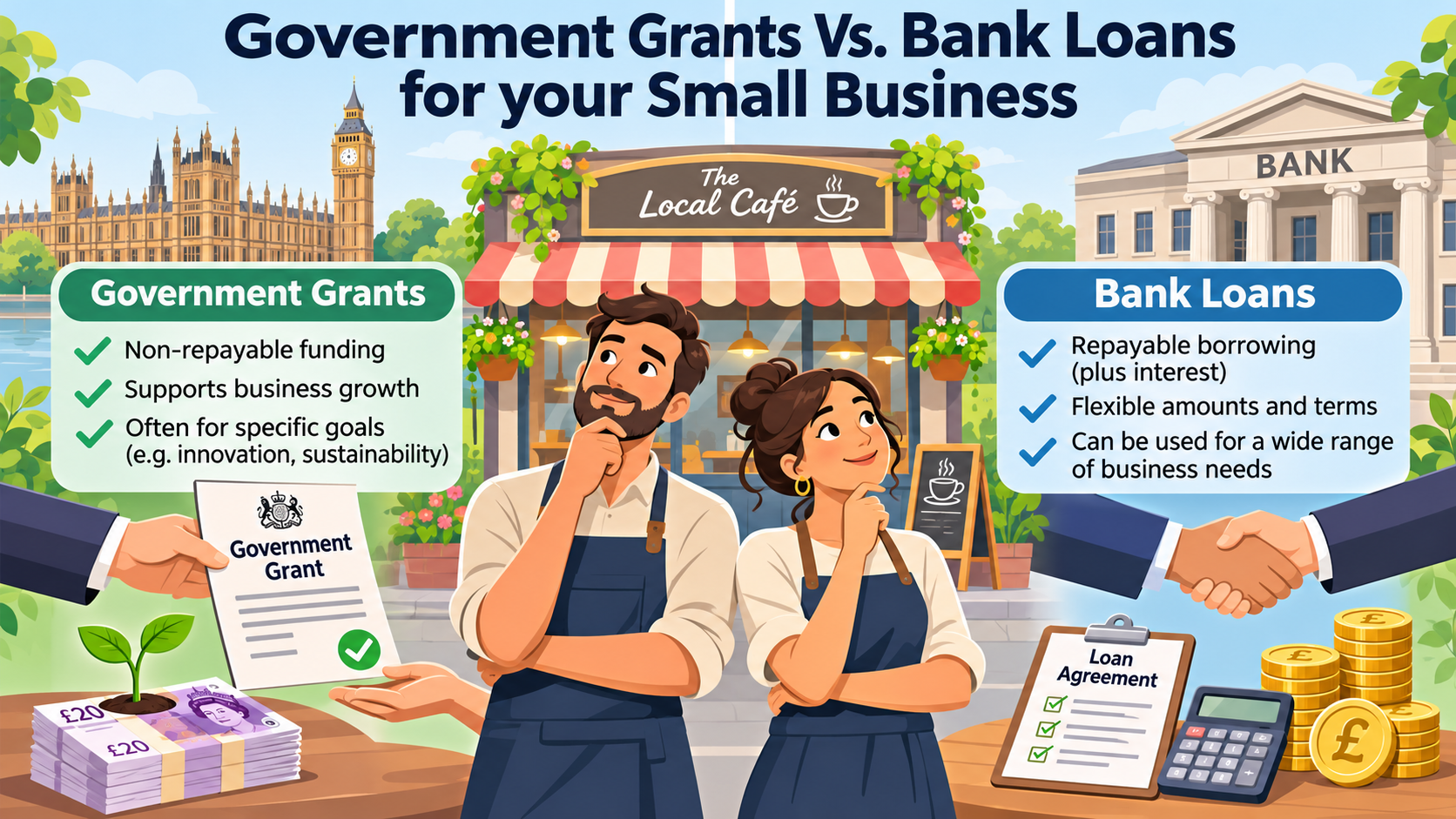
Government grants are essentially free money provided by the government to support specific industries, sectors, or small businesses that meet specific requirements. The eligibility criteria for most grants often include factors such as location, size, sector, growth potential, and innovation. Grants can be used for a variety of purposes, such as research and development, purchasing new equipment, hiring additional staff or expanding your business.
On the other hand, bank loans are money borrowed from a financial institution that you must repay with interest over a set period. The interest rate and terms of repayment may vary depending on the lender, amount borrowed, and creditworthiness of the borrower. Banks lend for a wide range of purposes, including starting a new venture, buying equipment, increasing cash flow or expanding existing business operations.
One of the major benefits of government grants is that they do not need to be repaid. However, the application, compliance, and reporting process can be lengthy, complex and time-consuming. Additionally, there is no guarantee that your business will receive the grant, as it is more competitive than bank loans.
Bank loans have the advantage of having a predictable repayment schedule, which can help with business planning and cash flow forecasting. However, they come with additional costs, such as interest charges and fees that can increase the overall cost of borrowing. Furthermore, banks are more likely to lend to established businesses with a track record of success and a well-documented financial history.
In conclusion, deciding between government grants and bank loans is a crucial decision for any small business owner in the UK. It is essential to consider the specific needs of your business, the eligibility criteria, and the terms and conditions of each option before making the final decision. By doing so, you can make an informed decision that aligns with your business goals and objectives.
Below are the points we will be looking at as we discuss Government Grants Vs. Bank Loans for your Small Business
- "Grants vs. Loans: Which is Right for Your UK Small Business?"
- "Maximising Your Small Business Funding with Government Grants and Bank Loans"
- "Navigating the UK Funding Landscape: Understanding Government Grants and Bank Loans"
- "Free Money vs. Repayment: The Pros and Cons of Government Grants and Bank Loans"
- "A Beginner's Guide to Small Business Funding: Comparing Government Grants and Bank Loans"
- "Choosing the Right Financial Strategy: Government Grants or Bank Loans for Your UK Small Business"
1. Grants vs. Loans: Which is Right for Your UK Small Business?
When it comes to funding your small business in the UK, there are a variety of options available. Two of the most common are government grants and bank loans. While both can be useful in providing the capital you need, there are some important differences to consider. Grants offer free money that doesn't need to be paid back, but they often come with stricter eligibility criteria and application processes. Loans, on the other hand, involve borrowing money that needs to be repaid with interest. However, loans are often easier to secure and can help build your creditworthiness. Ultimately, the decision between grants and loans will depend on your business's financial situation and goals.
2. Maximising Your Small Business Funding with Government Grants and Bank Loans
To make the most of your small business funding, it's important to consider all of your options. Government grants and bank loans can work together to provide the capital you need to grow and expand. Grants can help fund specific projects, such as research and development, while loans can provide ongoing support for day-to-day operations. By combining both types of funding, you can maximise your resources and increase your chances of success. It's important to carefully evaluate your needs and goals to determine the best financial strategy for your business.
 Experts available today
Talk to a real funding expert — not a bot
A real person reviews your business on the call and tells you which grants you qualify for and how much you could get.
- Your eligible grants, answered directly
- How much funding you can apply for
- Programmes open right now
3. Navigating the UK Funding Landscape: Understanding Government Grants and Bank Loans
Navigating the UK funding landscape can be challenging, especially for small business owners. To help simplify the process, it's important to understand the differences between government grants and bank loans. Government grants are typically funded by tax revenue and allocated to specific industries or projects based on specific eligibility criteria. Bank loans are provided by financial institutions and involve borrowing money that must be repaid with interest. It's important to carefully evaluate both options and determine which one is the best fit for your business's financial needs and goals.
4. Free Money vs. Repayment: The Pros and Cons of Government Grants and Bank Loans
One of the biggest differences between government grants and bank loans is the issue of repayment. Grants offer free money that doesn't need to be paid back, but they often come with stricter eligibility criteria and longer application processes. Loans involve borrowing money that needs to be repaid with interest, but they can help build your creditworthiness and provide ongoing support. Other factors to consider include interest rates, repayment terms, and funding limits. By carefully weighing the pros and cons of each option, you can choose the funding strategy that best fits your business's needs.
5. A Beginner's Guide to Small Business Funding: Comparing Government Grants and Bank Loans
If you're new to small business funding in the UK, it can be overwhelming to figure out where to start. One key decision is whether to pursue government grants or bank loans. Government grants offer free money that can be a great option if you meet the strict eligibility criteria. However, if you're not eligible for grants, bank loans can provide a reliable source of funding. It's important to evaluate your business's financial goals and needs, as well as the terms and conditions of different funding options, to choose the best funding strategy for your business.
6. Choosing the Right Financial Strategy: Government Grants or Bank Loans for Your UK Small Business
When it comes to choosing the right financial strategy for your small business in the UK, there are a number of factors to consider. Government grants offer free money that can be appealing, but they may be harder to qualify for and involve a longer application process. Bank loans involve borrowing money that needs to be repaid with interest, but they can be easier to obtain and help build your creditworthiness. Other factors to consider include interest rates, repayment terms, and funding limits. Ultimately, the best financial strategy will depend on your business's financial goals and needs.
In conclusion, small business owners in the UK have access to a range of funding options, including government grants and bank loans. While grants offer free money with no repayment needed, they often come with strict eligibility criteria and application processes. Loans involve borrowing money with interest, but can provide reliable ongoing support and help build creditworthiness. A combination of both funding types can be a great way to maximise resources and ensure business success. When making a decision on which funding option to pursue, it's important to evaluate your business's financial goals and needs and carefully compare the pros and cons of each option.
Helpful resources to get you going in the right direction with your own business:
Use the Business Plan Builder Tool to develop your own business plan. And use the Funding Database to find all government funding options for your small business.
About Olivia Chen
Olivia is a business expert at UK Startups who guides entrepreneurs through proven growth strategies and sound operational practices.