Government Grants Versus Bank Loans for your Small Business
Explore the pros and cons of government grants vs. bank loans for small businesses, including eligibility, repayment terms, interest rates, and funding challenges.
Written by
John Camerson
Business Challenges and Success
When you are in need of a capital infusion into your small business, you don't really care if the money you obtain is from a credit card, a bank loan, a government grant or from family or friends. But should you care where it comes from? Is there a difference between one type of funding versus another?
The simple answer is, yes.
Any funding is good funding, but it's the final details that you should care about.
Government Grants vs. Bank Loans
Let's take the two big ones, government grants and bank loans for an example. Both are great ways to get a capital investment in your business so you can move forward with your advertising, marketing, hiring of employees, purchasing of equipment, maybe even land. But which one is a better option, and why?
Bank Loans
If you are considering applying for a bank loan it's important to know the advantages and disadvantages of applying and using funds from a bank loan.
The application process is a simple one; simply visit your local bank branch, speak to a business loan advisor, provide the necessary paperwork and get the funding you need if you are eligible based on your credit score and other factors which your bank advisor may tell you more about.
You can quickly have the money you need to fund your business, at a low interest rate (usually from 2-6%, depending on the bank, amount and your credit history).
The negatives of obtaining a bank loan is that you do have to make minimum monthly payments, and you are responsible for all of the money borrowed no matter if your business fails or succeeds. This is the scariest part that makes entrepreneurs back away from applying for a bank loan.
 Experts available today
Talk to a real funding expert — not a bot
A real person reviews your business on the call and tells you which grants you qualify for and how much you could get.
- Your eligible grants, answered directly
- How much funding you can apply for
- Programmes open right now
Government Grants
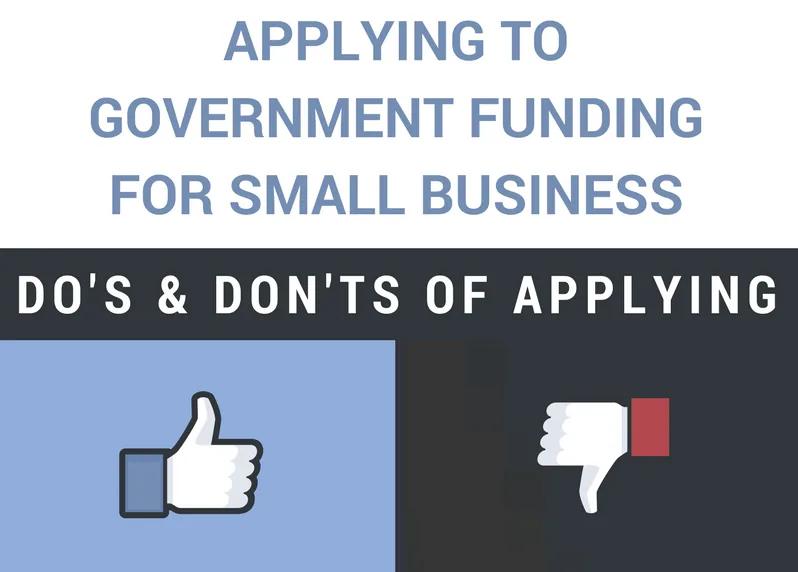
A government grant on the other hand is a great option to obtain funding for your small business as it often means "free money". Is it really free money that you don't have to pay back? Well, depending on the government agency you work with, the funding purpose and your business industry, a grant can be a simple contribution that is non-repayable. In some instances, a grant can also be a partial contribution as long as you input the other part yourself. Grants can also come in multiple forms depending again on your government, your requirements and eligibility.
Applications are a bit confusing to complete, and you may require assistance - but most of the time once you've got it handled it is a better result in the end than a bank loan (with monthly payments).
The negative of government grants is the fact that they are difficult to obtain. You may be going head to head with thousands of other business owners and entrepreneurs trying to apply for the same grant. You may also be required to have a business plan, along with a difficult to complete application in order to even be eligible - if you meet the criteria set by the funding program agency.
Conclusion
Any money is good money, especially when it comes to you for your small business. It is up to you as an entrepreneur to make the business decision whether to go with a bank loan, a government grant or even both.
About John Camerson