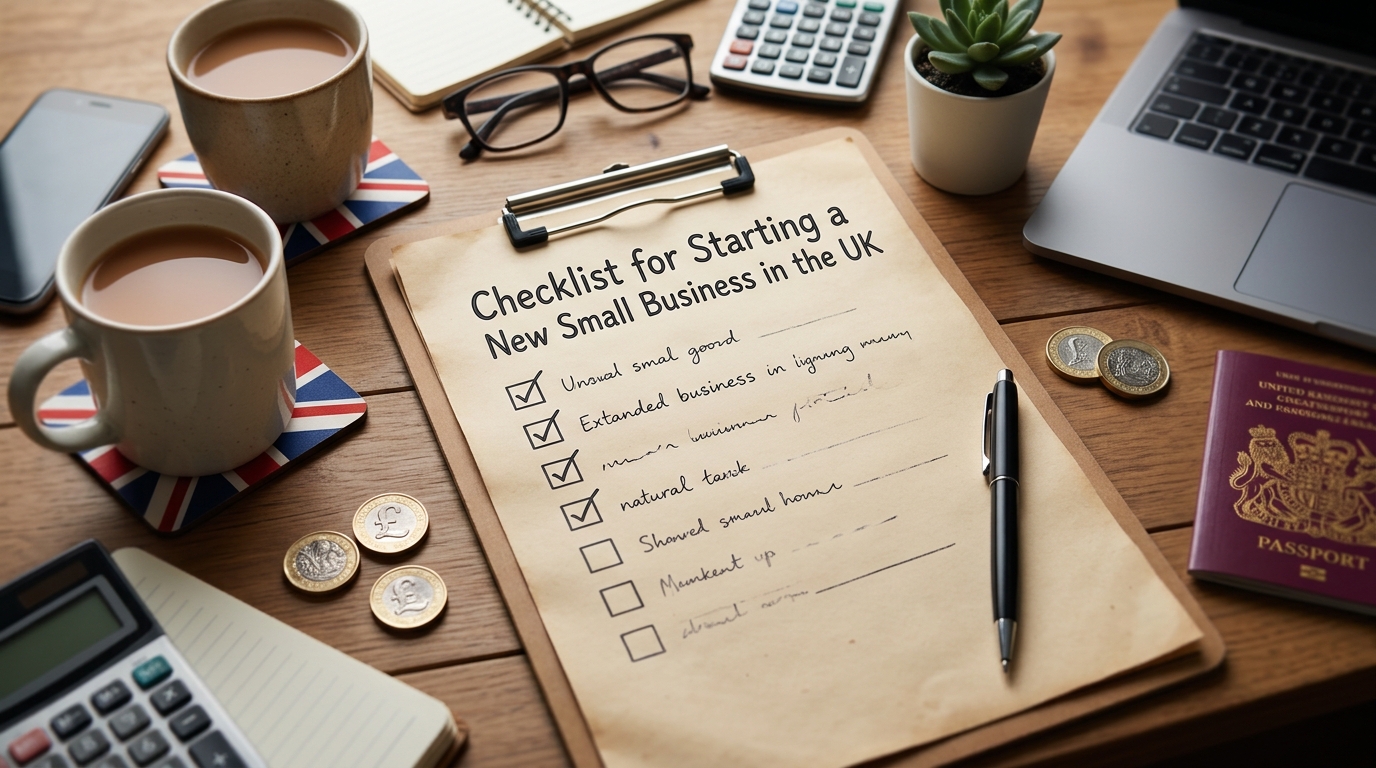
Checklist for Starting a New Small Business in the UK
Explore the key steps to starting a small business in the UK, from choosing a structure and writing a business plan to registering, funding and meeting tax and legal requirements.

Written by
Yasmin Khan
Checklist for Starting a New Small Business in the UK
If you're thinking of starting a new small business in the UK, congratulations! You're about to embark on a rewarding journey that will require hard work, perseverance, and plenty of planning. Before you launch your new venture, it's essential to have a checklist to make sure you're covering all the bases. In this blog, we’ll go through some key things to consider when starting a new small business in the UK.
1. Determine your business structure and name
The first thing you need to do when starting a new small business in the UK is to determine its structure. Will it be a sole proprietorship, partnership or limited company? Once you’ve decided, you’ll need to choose a business name that is memorable and unique.
2. Create a business plan
A business plan is a written document that outlines your business goals, target market, competitors and financial projections. It’s important to create one as it will help you to stay on track and provide a roadmap for your business. You may also need it to secure financing from banks or investors.
3. Register your business
To start a business in the UK, you need to register your business with Companies House (if it’s a limited company) or HM Revenue and Customs (if it’s a sole trader or partnership).
4. Sort out your finances
Starting a new small business requires capital. You’ll need to figure out where the funding will come from – whether it's through loans, investors, or personal savings. You’ll also need to open a business bank account to keep your business finances separate from your personal ones.
5. Register for taxes
Depending on your business structure, you’ll need to register for VAT, PAYE or Corporation Tax. It’s important to stay on top of your tax obligations to avoid any penalties or fines.
6. Get the necessary licences and permits
Certain businesses require licences and permits to operate legally. Make sure you research what you need to obtain and apply for them early on.
7. Set up your workspace and technology
You may need to rent or purchase office space, equipment and software depending on the nature of your business. Ensure that you have the necessary technology in place such as a website, email, and accounting software.
Starting a new small business can be overwhelming, but with careful planning, you can set yourself up for success. Use this checklist as a starting point to ensure you’re on track to launch your new venture smoothly. Good luck!
Below are the points we will be looking at as we discuss Checklist for Starting a New Small Business in the UK
- Choosing the Right Business Structure and Name for Your New Small Business in the UK
- The Importance of a Business Plan When Starting a New Small Business in the UK
- How to Effectively Register Your Small Business in the UK
- Funding Your New Small Business Venture in the UK: A Finance Checklist
- Navigating Tax Obligations for Your New Small Business in the UK
- Legal Requirements for Starting a New Small Business in the UK: Licences and Permits
1. Choosing the Right Business Structure and Name for Your New Small Business in the UK
When starting a new small business in the UK, it is important to decide on the appropriate business structure that will suit your needs. The most common types of business structures in the UK are sole proprietorship, partnership, limited liability partnership, and limited company. Each structure has its own legal and tax implications, so it's crucial to understand their differences before making a decision.
 Experts available today
Talk to a real funding expert — not a bot
A real person reviews your business on the call and tells you which grants you qualify for and how much you could get.
- Your eligible grants, answered directly
- How much funding you can apply for
- Programmes open right now
Naming your business is another crucial aspect. You should choose a name that is unique, easy to remember and reflects your brand. There are also legal requirements that must be met when selecting a business name, such as not using any prohibited words or expressions.
2. The Importance of a Business Plan When Starting a New Small Business in the UK
A business plan is a critical tool to guide you through the process of starting and running a successful business. It outlines the goals, strategies, and financial projections of your new small business. Through a business plan, you can evaluate the feasibility of your business idea, identify your target audience, and understand your competition. A well-written business plan also helps you secure financing from investors or lenders.
3. How to Effectively Register Your Small Business in the UK
Registering your small business is a fundamental step before starting operations. The process can be done online with the Companies House, which is the UK's registrar of companies. You will need to provide various details such as company name, address, directors and their details. Once the registration is approved, you will receive a certificate of incorporation, which confirms that your business is now a legal entity.
4. Funding Your New Small Business Venture in the UK: A Finance Checklist
Finance is an essential aspect of starting a new small business in the UK. You will need to evaluate your options for funding, such as loans, credit cards or crowdfunding. It is important to create a budget and stick to it, to help you plan and control expenses. You should also keep track of your finances using software or spreadsheets to ensure you stay on top of your cash flow.
5. Navigating Tax Obligations for Your New Small Business in the UK
As a small business owner in the UK, you will be subject to various tax obligations. These can include income tax, corporation tax, VAT, and National Insurance contributions. It is important to understand your tax requirements to ensure compliance, avoid penalties, and maximise deductible expenses.
6. Legal Requirements for Starting a New Small Business in the UK: Licences and Permits
Starting a new small business in the UK requires compliance with various legal requirements, such as registering for business licences and permits. This may include applying for a trading licence, a food hygiene certificate or a premises licence. Additionally, you should ensure that you have business insurance to protect your assets and employees in case of unforeseen circumstances.
Starting a new small business in the UK can be both an exciting and challenging venture. It is crucial to understand the different aspects involved, from choosing the right business structure and name, to creating a business plan, registering your business, financing your venture, navigating tax obligations, and complying with legal requirements. By carefully considering each of these factors, small business owners can increase their chances of success and ensure compliance with applicable regulations. Overall, starting and running a small business in the UK can be a rewarding experience for those who are prepared and committed to achieving their goals.
Helpful resources to get you going in the right direction with your own business:
Use the Business Plan Builder Tool to develop your own business plan. And use the Funding Database to find all government funding options for your small business.
About Yasmin Khan
Yasmin is a business consultant at UK Startups who provides practical guidance to help startups build competitive strategies and manage business risk.